



Important Safety Information
Serious injury or death can result from failure to follow safe practices or failure to observe the warnings and advice that is placed throughout this guide. Be sure that all personnel are thoroughly familiar with all of this information before servicing tires or working on vehicles.
Inflation Pressures
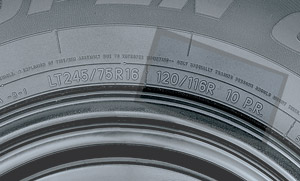
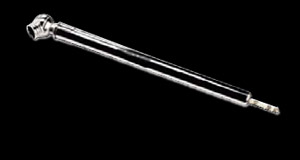
Maintaining proper inflation pressure is very important to safety. Underinflation increases sidewall flexing, which causes heat buildup. Severe underinflation produces heat buildup that can lead to tire failure. Overinflation can increase susceptibility to impact damage. Both overinflation and underinflation can have adverse effects on handling. All tires “no matter who manufactures them” lose air pressure very slowly with the passage of time. In addition, inflation pressures increase or decrease in direct relationship to ambient air temperature. Therefore, you should always advise your customers to check inflation pressures every month, as well as prior to any long trips. These checks should always include the spare. Pressures should always be checked with the tires cold. That means before the vehicle has been driven more than one mile (two kilometers), or not until it has been at rest for at least three hours. Check pressures with a gauge that is known to be accurate. (Verify this accuracy periodically.) Refer to the vehicle’s owner’s manual or tire information placard for the correct pressures. Never reduce inflation pressures when tires are hot, and do not exceed the pressure limit molded into the sidewall when tires are cold.
Load Capacity of Replacement Tires
Replacement tires must have equal or greater load carrying capacity compared to the original tires fitted to the vehicle. WARNING! Installers carry a significant risk of liability if they fit replacement tires with lower load capacity than the original tires, or fail to adjust the vehicle air pressure to achieve the original tire load capacity. Even proper size replacement tires will not have enough load capacity if the inflation is set incorrectly, i.e too low. If undersized, and or underinflated tires are applied to any vehicle, they are subject to sudden failure due to fatigue, loss of vehicle control, and risk of injury to the vehicle occupants.
Speed-rated Tires
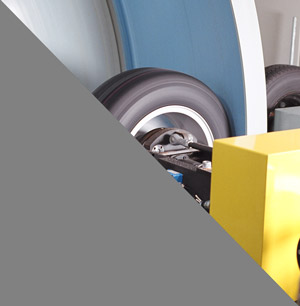
Speed ratings are used to indicate a tire’s maximum speed capabilities provided that proper inflation pressure and load-carrying capacity are maintained. Speed ratings are determined by indoor laboratory testing methods which measure high-speed tire durability under controlled testing. These test procedures do not take into account underinflation, tire damage, vehicle characteristics or road conditions which can lead to sudden tire failure or loss of vehicle control at much lower speeds than indicated by the tire’s speed rating. Speed-rated tires are identified by a letter that appears either in the size designation or as part of the service description that accompanies the size designation. These letters (such as S, T, H, V, W, Y and Z) come from a graduated scale and identify the maximum speed capability of the tires. Original Equipment tires must always be replaced with tires of the same or higher speed rating. Failure to do this lowers the speed capability of the vehicle to that of the tire with the lowest speed rating. Note: Mounting tires with higher speed ratings than Original Equipment does not necessarily increase the vehicle’s speed capability.
Toyo Recommends That Tire Installers Always Consider the Following:
-
- Toyo does not recommend mixing different speed rated tires on any vehicle.
- Winter (snow) tires should always be fitted in matched sets of four.
- It is recommended that tire installers refer to the vehicle owner’s manual to identify any tire speed rating restriction or recommendation that could affect the operation of the vehicle.
- In any case where the tire installer downgrades the speed rating of the original tire (such as the fitment of winter tires), it is advisable that the consumer be informed.
Tire Mounting and Dismounting
Tire mounting and dismounting should only be attempted by trained or qualified personnel. Serious injury or death could result from the powerful and potentially explosive forces involved. Radial tires should always be mounted on rims designed for radials. In addition, tire diameters, rim diameters, and rim widths must match. Rim widths must also be proper for the tire size being mounted. You should always personally check this. Do not take anyone’s word. Tires and rims that are mismatched can explode during the inflation process. They also can fail on the highway. WARNING! Never exceed 40 psi (280 kPa) when seating beads. Use the RMA (Rubber Manufacturers Association) safety and installation procedures for mounting and inflation.
Avoid Customer Complaints for Vibration Caused by Tire/Rim Slip
Toyo recently completed testing on several tire brands, including Toyo, revealing that tire slip on wheels is a major cause of vibration leading to customer complaints. The main cause of tire/wheel slip is excessive use of tire lubricant on the tire beads and rim. Excessive lubricant reduces friction between the tire bead and the wheel, allowing the tire to slip within hours of mounting. Recommendations:
-
- For new tire and wheel assemblies, clean the tire beads of any manufacturing related lubricants with an approved rubber cleaner fluid commonly used in the tire repair process.
- Clean the wheel bead seating area.
- Use a sponge and a paste-type lubricant to lubricate the tire bead sole according to the photo shown.WARNING! High performance, low profile passenger tires mounted on European-made alloy wheels may require higher mounting pressures, as bead seat tolerances may be tighter than domestic wheels. Additional lubrication of the safety hump (as shown below) may be required to facilitate bead seating.
-
- If more than 40 psi is required to seat the beads, dismount the tire, re-lubricate and repeat the process. Always follow the advice of the tire and wheel manufacturer regarding maximum pressure.
- Index the wheel valve stem to some location on the tire sidewall so that slippage can be confirmed in the event of a customer return for vibration. In the event of a customer complaint where tire/wheel slip has occurred, remove the old weights and re-balance the assembly. Do not dismount the tire unless there is a requirement to match-mount the assembly.
Important Information on Replacing Original Equipment Tires
In direct Original Equipment replacements, the replacement tire must have a speed rating equal to or greater than the Original Equipment tire. In Plus-Sizing applications, the replacement tire must have:
-
- Load-carrying capacity equal to or greater than the Original Equipment tire.
- Speed-rating equal to or greater than the Original Equipment tire.
- An overall diameter of within plus 3 or minus 3 percent (maximum) of the Original Equipment tires’ overall diameter. However carefully follow the rim width and clearance recommendations within this site.
WARNING! Tires installed on vehicles with modified suspensions and increased ground clearance. Consumers should be aware that the installation of off-road -type tires combined with modified suspensions and increased ground clearance will significantly alter the handling characteristics of the vehicle, and may result in increased braking distances as well as significant changes in vehicle maneuverability and handling compared to the factory-equipped vehicle. As with any vehicle, EXTREME CARE must be used to prevent loss of control or roll-over during sharp turns or abrupt maneuvers. Always wear seat belts, and drive safely, recognizing that reduced speeds and specialized driving techniques may be required. Failure to drive vehicle safely may result in serious injury or death. Do not drive any vehicle unless you are familiar with its unique handling characteristics and are confident of your ability to maintain control under all driving conditions. Some modifications (and combinations of modifications) are not recommended and may not be permitted in your province. Consult your owner’s manual, the instructions accompanying this product, and state laws before undertaking these modifications. You are responsible for the legality and safety of the vehicle you modify using these components. Wheel Load Capacity WARNING! Just as tires have maximum load capabilities, so do wheels. Every wheel has a load capacity and psi limit. Prior to installing any tire on a wheel, make sure the wheel load capacity is equal to or greater than the maximum load and psi of the tire. If the wheel load capacity and psi are less than the tire, the wheel may fail suddenly during mounting or while in service. Wheel load capacity is usually stamped on the inner part of the wheel per photo below.
Tire Replacement References
-
- When replacing tires, always refer to the vehicle’s tire information placard, owner’s manual. For custom fitments, the Toyo Fitment Guide located on the Toyo Tires website .. (toyotires.ca) is a good reference, however, it is always best to get confirmation from the auto manufacturer. This is especially important if any changes above +1.
Tire Information Placard
-
- Always refer to the tire information placard for data on the vehicle’s Original Equipment wheels and tires, as well as inflation pressures. This placard can be found in one of six places:
-
-
- Along the edge of a door
- On a door post
- In the glove box
- Inside the fuel-filler door
- Inside the trunk
- In the vehicle owners manual
-
-

Add a note